
In the field of industrial laminating and packaging, hot melt adhesive coating technology is gradually replacing traditional solvent-based laminating methods due to its core advantages of high efficiency, environmental friendliness, and wide adaptability. It has become a key choice for numerous enterprises to improve production efficiency and optimize product quality. From daily food packaging and diapers to industrial automotive interiors and building material composites, hot melt adhesive coating technology plays an important role behind the scenes. Today, we will take you to deeply understand this “invisible yet crucial” industrial technology and see how it empowers various industries.
I. What is Hot Melt Adhesive Coating?
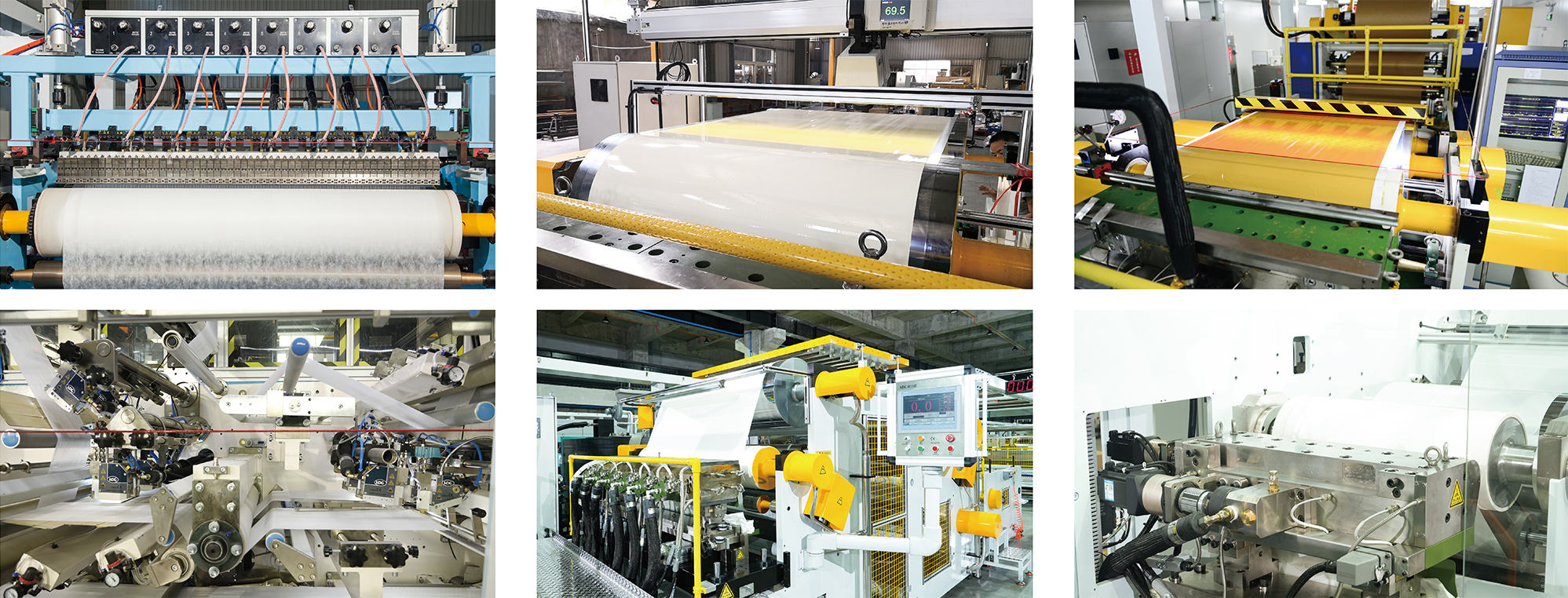
Simply put, hot melt adhesive coating is a process where hot melt adhesive (a solvent-free, solid adhesive) is heated and melted by a hot melt glue systems, then evenly applied to the substrate surface with precise thickness and pattern, and rapidly solidifies upon cooling to achieve bonding. Its core principle is based on the “hot melt and cold solidification” characteristic of hot melt adhesive: when heated, the hot melt adhesive turns into a flowing liquid for easy uniform application; upon contact with a room-temperature substrate, it quickly cools to a solid state, forming a strong bonding layer.
Compared with traditional solvent-based adhesives, hot melt adhesive coating eliminates the need to wait for solvent evaporation, greatly shortening the curing time. Meanwhile, as it contains no organic solvents, it avoids the harm of volatile substances to the environment and human health, and reduces fire risks, making it a technology that conforms to the modern industrial trend of “green environmental protection”.
II. Core Advantages of Hot Melt Adhesive Coating
As a mature industrial coating technology, hot melt adhesive coating has prominent advantages, which are the core reasons for its wide application in various industries:
1、High Efficiency and Speed, Enhancing Production Efficiency: Hot melt adhesive melts quickly when heated, and the cooling and curing time after coating is short (usually completing curing in a few seconds to tens of seconds), enabling continuous and high-speed production. For example, in the food packaging industry, production lines using hot melt adhesive coating can complete the bonding of hundreds of packages per minute, far exceeding the efficiency of traditional bonding processes.
2、Green and Environmental Friendly, Aligning with Policy Trends: Hot melt adhesive itself is free of organic solvents, volatile substances, and odors. During use, it does not produce toxic or harmful gases, nor does it cause environmental pollution. This not only meets environmental protection requirements but also helps enterprises avoid environmental penalties caused by solvent-based adhesives, while improving the workshop working environment.
3、Strong Bonding, Adapting to Various Substrates: Hot melt adhesive has an extremely wide bonding range, capable of forming good bonds with various substrates such as paper, plastic, metal, fabric, and wood. It also has high bonding strength and good stability, able to meet the usage requirements in different environments. For example, in the automotive interior industry, hot melt adhesive coating can achieve firm bonding between leather, fabric, and plastic substrates, which is not easy to fall off even in high-temperature and vibrating environments.
4、Precise Control, Reducing Material Waste: Modern hot melt adhesive coating equipment can precisely control the coating thickness (adjustable from a few micrometers to several hundred micrometers), width, and pattern through computer control systems, ensuring coating uniformity. This precise control can effectively reduce the waste of hot melt adhesive and lower the enterprise’s raw material costs; at the same time, the uniform coating layer can also improve the product’s appearance quality and bonding stability.
5、Simple Operation, Low Maintenance Costs: Hot melt adhesive coating equipment has a relatively simple structure and high degree of automation. Operators can get started after simple training; daily maintenance of the equipment mainly focuses on the cleaning of the heating system and coating head, with low maintenance costs and low failure rates, which can ensure the stable operation of the production line.
III. Typical Application Scenarios: Penetrating Every Aspect of Life and Industry
With the above advantages, hot melt adhesive coating technology has been widely applied in various industries such as label & tape, medical, filtration, automotive, hygiene products, building materials, electronics, and textiles, becoming an important technical support for promoting industrial upgrading:

1. Label and Tape Industry
Suitable for the production of supermarket price tags and barcode labels, laminating of logistics and express waybills, laminating of daily chemical and food packaging labels, processing of industrial special functional label tapes, etc. The label and tape industry has extremely high requirements for the adjustable bonding strength, weather resistance stability, and environmental safety of hot melt adhesive. Hot melt adhesive coating can meet these stringent requirements, while realizing high-speed mass production and green compliant production.
2. Medical Industry
Used in medical tapes, medical dressings, medical isolation gowns, surgical drapes, and medical device assembly. It is environmentally friendly and sterile without VOCs, with good bio-compatibility and low allergenicity, and can withstand ethylene oxide or gamma ray sterilization. It can realize dressing compounding, protective equipment sealing, device bonding, and sterile packaging sealing, with firm bonding and adaptability to human body needs, ensuring the safety and use stability of medical products.
3. Filtration Industry
Applied in filter material laminating, end cap bonding, pleat fixing, and frame sealing, adapting to various substrates such as PP, glass fiber, and non-woven fabrics. It is environmentally friendly without VOCs, with rapid curing adapting to high-speed production, and temperature and chemical resistance. The firm bonding and tight sealing can prevent fluid bypass, ensuring filtration efficiency and long-term stable operation of equipment.
4. Automotive Industry
Applied in automotive interiors (such as bonding of seats, instrument panels and door panels), lamp sealing, wire harness fixing, etc. The automotive industry has extremely high requirements for the high and low temperature resistance, aging resistance, and shock resistance of hot melt adhesive. Hot melt adhesive coating can meet these stringent requirements, while realizing lightweight and environmentally friendly production.
5. Construction Materials Industry
Used for bonding laminated flooring, wallpaper, thermal insulation materials, and waterproof materials. For example, in the production of laminated flooring, hot melt adhesive coating can realize firm bonding between wood veneer and substrate, with fast curing speed that does not affect production efficiency; in wallpaper pasting, the environmental characteristics of hot melt adhesive can avoid indoor formaldehyde pollution.
6. Hygiene Products Industry
It is one of the core technologies in the production of hygiene products such as diapers, sanitary napkins, and wet toilet paper. Used for bonding waistbands, leak-proof edges, and core fixing, it requires hot melt adhesive to have soft, breathable, and skin-friendly characteristics, as well as firm bonding and not easy to deform.
7. Electronics Industry
Suitable for fixing electronic components, encapsulating circuit boards, and bonding battery modules. The electronics industry has extremely high requirements for coating precision. Hot melt adhesive coating equipment can achieve micrometer-level precise coating, and the insulation and high-temperature resistance of hot melt adhesive can ensure the stable operation of electronic components.
IV. Key Considerations for Selecting Hot Melt Adhesive Coating Solutions
For enterprises, selecting a suitable hot melt adhesive coating solution can maximize the technical advantages. The following are several key considerations:
1、Clarify Application Scenarios and Substrate Characteristics: Different industries and substrates have different requirements for the type of hot melt adhesive (such as EVA type, PO type, PA type), coating thickness, and pattern. For example, bonding plastic substrates requires choosing hot melt adhesive with good compatibility with plastic; hygiene products require choosing soft and breathable hot melt adhesive.
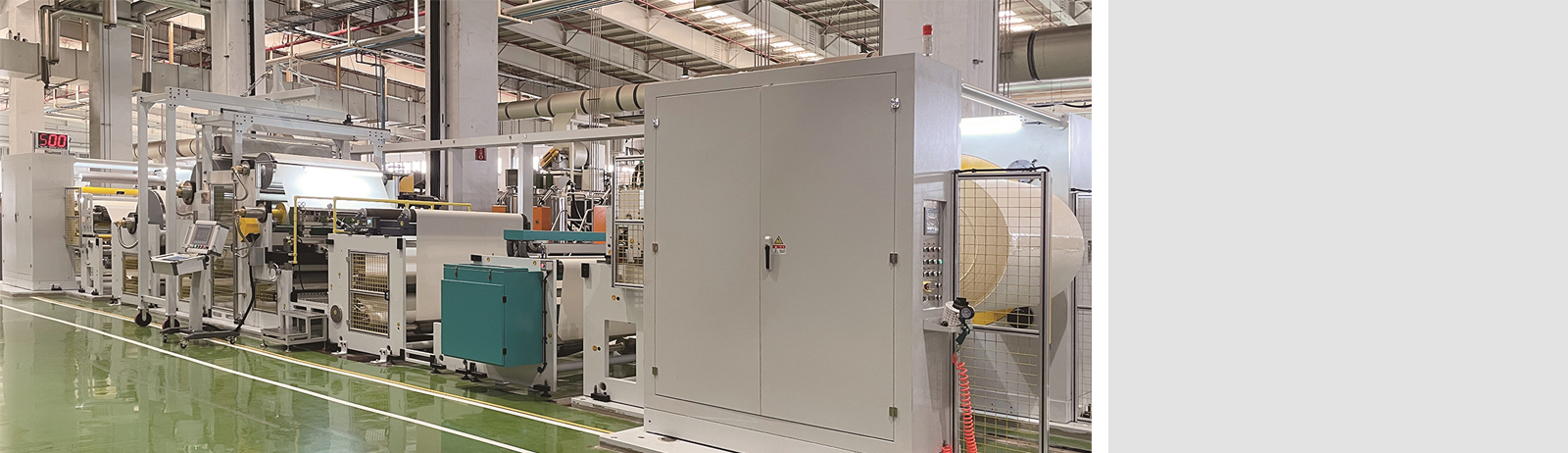
2、Match Production Efficiency Requirements: Select corresponding hot melt adhesive coating equipment according to the speed of the enterprise’s own production line. High-speed production lines need to choose equipment with fast heating speed and high coating stability to avoid affecting production efficiency due to insufficient equipment performance.
3、Pay Attention to Equipment Precision and Intelligence Level: Precise coating can reduce material waste and improve product quality; intelligent equipment (such as equipment with PLC automatic control system and automatic detection function) can reduce manual intervention and improve production stability.
4、Choose Reliable Suppliers and After-Sales Service: The implementation of hot melt adhesive coating solutions requires the coordinated cooperation of equipment, hot melt adhesive, and technical support. Choosing suppliers with rich industry experience, who can provide customized solutions and timely after-sales service, can avoid many problems in subsequent production.
V. Future Trends of Hot Melt Adhesive Coating Technology
With the increasingly strict environmental policies and the continuous improvement of requirements for production efficiency and product quality in various industries, hot melt adhesive coating technology will usher in a broader development space. In the future, the technology will upgrade towards the direction of “more precise, more intelligent, and more environmentally friendly”: on the one hand, the intelligence level of coating equipment will be further improved, realizing full-process automatic control and data management; on the other hand, the research and development of high-performance hot melt adhesives (such as high-temperature resistant, low-temperature resistant, and biodegradable hot melt adhesives) will further expand its application fields.
If your enterprise is facing the needs of bonding process upgrading, environmental rectification, or efficiency improvement, NDC‘s hot melt adhesive coating technology may be your ideal solution. With years of experience in the hot melt adhesive coating industry, we can provide customized equipment selection, hot melt adhesive matching, and process optimization solutions according to your specific needs, helping enterprises achieve efficient, environmentally friendly, and high-quality production. Welcome to contact us at any time to discuss cooperation possibilities!
Post time: Jan-10-2026